
"natural altitude"
10000 article(s) found

Introduction to the method of processing in producing areas for describing the Flavor of single Bean varieties in Yejia Feiwoca Cooperative
For the exchange of professional baristas, please follow the coffee workshop (Wechat official account cafe_style) Ethopia Ethiopian population: 93877000 Ethiopia's producing area name is the most recognized in the coffee industry and is currently the country with the largest number of coffee names as the name of the producing area. This is the case today, and the future is foreseeable. In addition, Arabica genes of original species and wild species

Champion coffee beans Jamaica Blue Mountain introduction to Blue Mountain Coffee History introduction to Natural Climate of Blue Mountain Coffee
Professional coffee knowledge exchange more coffee bean information Please follow the coffee workshop (Wechat official account cafe_style) people are always looking for the best things, looking for the most mellow wine, the most charming cigars or the noblest champagne, etc., and coffee is the same, it is happy to drink good coffee, so people begin to pursue better coffee, from

A brief introduction to the market price of advantaged Panamanian boutique coffee beans
Casa Ruiz, S.A. The family and his coffee partners chose to follow the Boquete growing area, which is traditionally environmentally friendly and maintains the natural ecosystem, and because the natural trees in the area provide rich natural environmental resources, the environment has become a transit habitat for migratory birds. Casa Ruiz, S.A., Panama.

Introduction to the characteristics of Costa Rican Yerzaro Coffee Flavor Manor
Costa Rica accounts for only 0.03% of the world's land area, but with nearly 4% of the world's species, Costa Rica is one of the countries with the richest biological species in the world. 26% of the land area is a national park or nature reserve, including 11 wetlands, 2 biological reserves and 3 World Natural Heritage sites. The national forest coverage rate is 52%. Natural resources include iron, manganese, mercury, bauxite,

Elida Manor, one of the three largest estates in Panama, tropical fruit coffee flavor
Elida Manor (Elida) [name]: Alida Manor Sunshine (Elida Natural) [production area]: Pocket (Boquete) [Manor]: Alida Manor (Elida) [Variety]: Catuai 85%, Typica Bourbon 15%, Geisha (a small amount) [treatment]: sun (Natural) [altitude]: over 1800 m [planting]

Tropical fruit-flavored Panamanian coffee beans: a brief introduction to geographical location, climate and altitude
Balu is a young volcano with a rugged mountain, more than 3400 meters above sea level, and belongs to an active volcano. Due to the excessive temperature difference between morning and evening, the coffee of Alida Manor needs 5 years of care after sowing to usher in the first harvest. The waiting time for receipt is quite long (usually coffee in producing areas is only 3 years). Although the plant growth is slow, it is very helpful to the development of coffee flavor.

Panamanian Carmen Manor Coffee Flavor grown at altitude
Following Cafe Review (Wechat official account vdailycom) found that Carmen Manor Coffee opened a small shop of its own. Coffee is a coffee estate dominated by the family. The family has long grown coffee based on the principles of providing high quality coffee and protecting the environment. In 1950, Efrain and Carmen Franceschi began to cultivate Arabica coffee varieties on their estate.

Pure flavor Costa Rica Goddess Manor Coffee Flavor Description Grind Taste Characteristics Variety
Costa Rica, which produces one-third of the world's coffee in all grades and varieties, has a place in the global coffee market. Although Costa Rica faces many times more natural disasters than other regions, its arable area is enough to compensate. There are many kinds of coffee here, but its industrial policy is large and cheap, so it is especially superior coffee and

Annual High altitude Rose Summer Coffee in the Baru Volcano region of Panama
Panamanian coffee originated in 1780, when European immigrants introduced the first Tipica tree species. Located in Central America, with the natural advantages of sunshine, land and mountains, coupled with a sufficient working population, the region is an excellent area for growing and producing high-quality boutique coffee, and it is a paradise for coffee. In particular, the Geisha coffee from Panama has led to the global customs.

Brazilian Coffee | San Antonio Manor-what are the flavor characteristics of cocoa elves?
Planting altitude: 1000 ~ 1100m planting area: Campos das Vertentes, South of Minas Gerias coffee varieties: catuai Kaduai harvest time: may-September treatment: Pulped Natural peel sunburn (natural drying or machine drying) size: 17 + SANCOFFEE has won several COE awards, the average planting altitude of coffee is about 1, 10

A brief introduction to the cultivation of lively and rich Panamanian boutique coffee beans, geographical location, climate and altitude
There are three main varieties planted in Elida Manor, namely, Catuai (Kaduai), Typica (Iron pickup) and Geisha (Rose Summer). The processing plant of the manor is halfway up the hillside. After the coffee is picked, it can be transported to the factory for processing as soon as possible to ensure that the quality of the coffee fruit is not affected. Of course, the environment of Elida is also suitable for growing other high-quality temperate crops, especially

A brief introduction to the cultivation of Panamanian boutique coffee beans with the highest performance-to-price ratio, geographical location, climate and altitude
Caesar of Panama. Louis Manor, founded in 1920, is located in the Boqui specialty area of Mount Baru, located in the Poquette Valley of Mount Baru in northwestern Panama. After three generations of coffee planting experience, the family combines more than 300 local small family farms, and small farm coffee farmers join partners from planting, post-processing, baking and marketing, unlike only

Introduction to the characteristics of flavor and taste in the producing area of Costa Rican Saint Roman Coffee Manor
Costa Rica is located in the Central American isthmus, belonging to North America, 10 north latitude, 84 west longitude. It is bordered by the Caribbean Sea to the east and the North Pacific Ocean to the west, with a coastline of 1290 km (212km on the east coast and 1016 km on the west coast). Costa Rica borders Nicaragua in the north (309 km long border) and Panama (639 km long border) south-southeast. Total

The rich flavor of Costa Rican goddess manor coffee flavor and taste characteristics of boutique coffee introduction
Costa Rica accounts for only 0.03% of the world's land area, but with nearly 4% of the world's species, Costa Rica is one of the countries with the richest biological species in the world. 26% of the land area is a national park or nature reserve, including 11 wetlands, 2 biological reserves and 3 World Natural Heritage sites. The national forest coverage rate is 52%. Natural resources include iron, manganese, mercury, bauxite,

A brief introduction to the planting situation of Panamanian boutique coffee beans, geographical location, climate and altitude in the world coffee farm
Balu is a young volcano with a rugged mountain, more than 3400 meters above sea level, and belongs to an active volcano. Due to the excessive temperature difference between morning and evening, the coffee of Alida Manor needs 5 years of care after sowing to usher in the first harvest. The waiting time for receipt is quite long (usually coffee in producing areas is only 3 years). Although the plant growth is slow, it is very helpful to the development of coffee flavor.

Yunnan fine coffee bean varieties planting geographical location climate altitude profile
Yunnan coffee is said to have been handed down by the French 70 or 80 years ago. The main production variety is Arabica Arabica, that is, the so-called Arabica coffee, commonly known as Yunnan Arabica coffee. Yunnan's high-quality geographical and climatic conditions provide good conditions for coffee growth. The planting areas are Lincang, Baoshan, Simao, Xishuangbanna, Dehong and other prefectures. Yunnan's natural conditions are very similar to those of Colombia
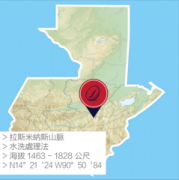
Introduction to the characteristics of Biya Manor Coffee beans in the Coffee production area of the La Minas Mine Mountains in Guatemala
The Las Minas Treasure range, the Las Minas Mountains Sierra de las Minas, located in eastern Guatemala, is famous in Central America for its rich gold and jade veins. In recent years, local farmers above 1400 meters above sea level have begun to try to grow coffee and other crops, which are rich in gold deposits and jade veins in addition to natural forest ecosystems and wildlife.

What are the local conditions? How is coffee naturally affected by climate, soil, etc.?
We often hear the word "local conditions" when we talk about coffee, but what exactly does it mean? Does it have anything to do with the flavor of coffee? Why do we need to care about the local environment? The author interviewed some people in the coffee and wine industries and asked them to tell you what was going on in the country. What are the local conditions? The word vernacular conditions comes from the French Terroir, which is most commonly used when talking about wine.

A brief introduction to the cultivation of Yemeni boutique coffee beans with unique flavor, geographical location, climate and altitude
Yemeni coffee market: Yemeni coffee is exported from December to April of the following year. The problem in the past has been that coffee from the north was mixed with shoddy stuff before it was shipped from the southern port of Aden. Only coffee shipped from the port of Hodeida can be determined to come from the north. The vast majority of coffee in Yemen is grown under natural conditions, mainly